Luxury Villa Interior Design in Marbella: What Truly Defines a High-End Home
What separates a truly high-end villa interior in Marbella from an expensive one: light, materials, proportion and the decisions that come before decoration.
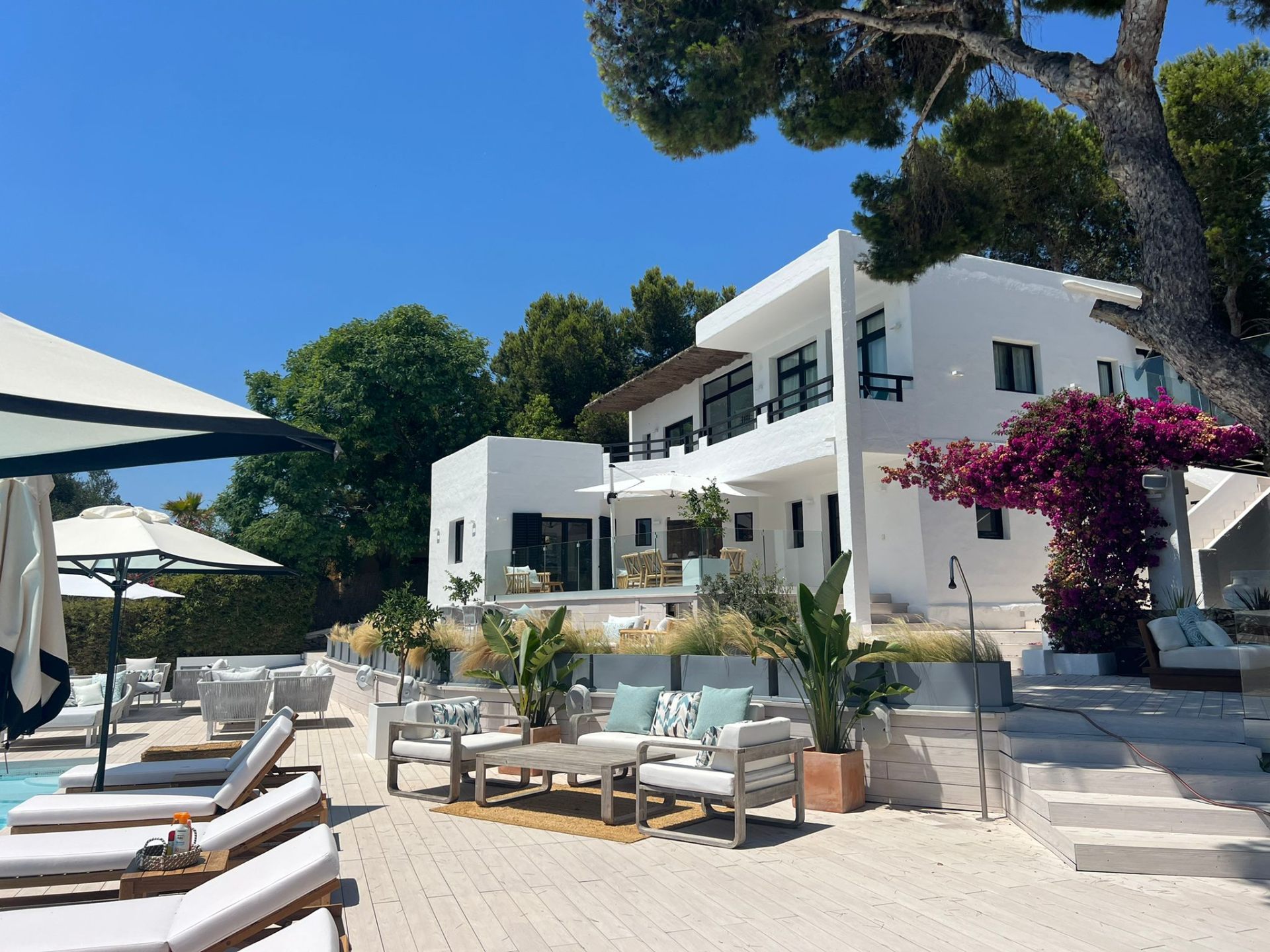
Marbella has no shortage of beautiful houses. Walk through La Zagaleta, Sierra Blanca or the Golden Mile and you will find villas with remarkable views, generous budgets and impeccable finishes. Yet only some of them feel effortless to live in.
That difference is rarely about spending more. It is about the sequence of decisions taken long before a single fabric is chosen — how light enters, how a family moves through the day, how materials will behave after ten summers of Andalusian sun. Luxury villa interior design in Marbella is, above all, an exercise in restraint and precision.
What makes a villa interior feel genuinely high-end?
A high-end interior is one where nothing fights for attention. The proportions are calm, the transitions between rooms are logical, and the details reward a second look rather than demanding the first one.
In practice, four qualities tend to separate a considered villa from a merely expensive one:
Proportion before product. Ceiling heights, door widths, the depth of a terrace overhang — these govern how a room feels far more than any piece of furniture placed inside it.
Material honesty. Stone that reads as stone, timber with visible grain, plaster with depth. Surfaces that age with character rather than degrade.
Controlled light. Natural light shaped by architecture during the day, and a layered artificial scheme that takes over at dusk without ever announcing itself.
Coherence across every room. A guest bathroom should belong to the same conversation as the main living space.
None of these are decorative choices. They are architectural ones, which is why the work begins at the level of interior architecture rather than furnishing.
The Mediterranean light problem nobody warns you about
The Costa del Sol enjoys an exceptional number of sunny days each year, and that is precisely the design challenge. Southern light in Marbella is bright, low-angled in winter and near-vertical in summer, and it is relentless on interior surfaces.
Designing for it means working with, not against, its intensity:
Orientation-led planning. Living spaces that open south and west gain the sea light, but they need deep overhangs, pergolas or recessed glazing to stay comfortable in August.
Surfaces that absorb glare. Large expanses of high-gloss stone or lacquer can turn a bright room into an uncomfortable one. Honed, brushed and matte finishes hold light more softly.
UV-stable specification. Textiles, timbers and even some stones fade unevenly under direct Mediterranean exposure. Specifying for longevity is a technical decision, not an aesthetic one.
Layered shading. Internal blinds, external systems and planting each solve a different hour of the day.
A villa that ignores this tends to be photographed beautifully once and then lived in with the curtains closed.
Materials that belong to this coast
There is a version of luxury that could be airlifted into any city in the world. It photographs well and dates quickly. The more durable approach draws on what the region already does well.
Natural stone remains the foundation of Andalusian interiors — limestone, travertine and local marbles offer thermal mass that helps regulate temperature and a tonal warmth that suits southern light.
Lime-based plasters and microcements give walls a depth that paint cannot reproduce, and they tolerate the humidity swings of a coastal climate better than many alternatives.
Timber, used sparingly and detailed properly, introduces the warmth that stone alone will not provide. Near the sea, species selection and finishing matter enormously: salt-laden air is unforgiving.
Metals need the same scrutiny. Untreated brass and certain steels will show corrosion within a season in a seafront property. Marine-grade specification is standard practice in a serious coastal project.
The point is not that these materials are expensive. It is that they are appropriate, and appropriateness is what allows an interior to age well.
How does an interior architect approach a villa differently?
An interior decorator works within the rooms that exist. An interior architect questions whether those rooms are right in the first place.
On a typical Marbella villa project, that means examining:
Whether a wall should move, disappear or become a structural opening to the sea view
How circulation works when the house is full of guests versus occupied by two people in February
Where services, storage and staff access sit — the invisible infrastructure that determines whether a house runs smoothly
How indoor and outdoor living genuinely connect, rather than simply sharing a sliding door
What the ceiling plane is doing, since it is the largest uninterrupted surface in most rooms and the one most often ignored
This is why the discipline sits between architecture and interior design. It carries the technical responsibility of the former and the sensory intelligence of the latter. We explore that relationship in more depth in our article on the fusion of architecture and interior design.
Designing for how the house is actually used
Many villas on the Costa del Sol are second homes, and that changes the brief substantially.
A property used intensively for two or three months a year, with large groups of family and friends, and left quiet for the rest, has requirements a permanent residence does not:
Robustness. Surfaces and textiles that survive wet swimwear, sun cream and children without visible anxiety.
Low-maintenance systems. A house that can be closed down and reopened without a week of preparation.
Flexible sleeping arrangements. Rooms that work for guests, grandchildren and occasionally staff, without feeling institutional.
Security and climate control that can be managed remotely and discreetly.
Equally, an increasing number of owners now live on the coast full time, work from the villa and expect it to perform as a primary residence. The correct answer differs entirely. Establishing which scenario is real — honestly, not aspirationally — is one of the most valuable conversations at the start of a project.
Bespoke furniture: where villas separate themselves
In a house with unusual proportions, sea-facing geometries and irregular sight lines, catalogue furniture rarely fits. Bespoke pieces are not an indulgence in this context; they are often the only way to resolve a space properly.
Custom joinery and furniture allow a project to:
Follow an awkward wall or a curved terrace without compromise
Integrate storage so completely that it stops reading as storage
Control the exact height, depth and material of a piece so it sits correctly against a view
Introduce a single sculptural element — a dining table, a headboard wall, a bar — that anchors the whole room
The craft workshops of Andalusia and the wider Mediterranean make this achievable within realistic timelines, provided the pieces are designed early rather than added at the end.
What should you resolve before the project starts?
Owners who get the best results tend to arrive with clarity on a small number of points. Before commissioning a villa interior in Marbella, it is worth settling:
Who the house is for, and when. Permanent home, seasonal retreat, rental asset or a combination.
The realistic timeline. Lead times for stone, bespoke joinery and specialist finishes shape the programme far more than construction itself.
The level of involvement you want. Some owners want to review every sample; others want to approve a direction and see the finished result.
Whether the architecture is fixed. If structural changes are still possible, the interior architect should be involved before that window closes.
The long view. A villa designed to be sold in three years is a different project from one intended to hold a family for twenty.
A villa that still feels right in ten years
The interiors that endure on this coast are not the ones that followed the loudest trend of their year. They are the ones designed around light, climate, proportion and the way a specific family lives — with materials chosen to improve rather than merely survive.
That is slower work, and it is less immediately dramatic. It is also the only version of luxury that keeps its value.
Victoria Holmquist is an international, multidisciplinary interior architecture studio based in Marbella, working on private residences, hospitality, clinics and yachts across the Costa del Sol and beyond. If you are planning a villa project, get in touch with the studio or explore our recent projects.